Life with Siberian Huskies
The Journey is more important than the destination
What is a Seppala Siberian Sled Dog?

There is much more to the modern-day Siberian than most people understand. Not much is known by those outside of the mushing world. Those of you who have a Siberian Husky may not even know how they came about. The mushers who actually live the life… run dogs in races, are familiar with the history of the breed, know about the legend of a man. The man was named Leonard Seppala and he invented the Siberian husky you may own today. They may have changed over the years but the DNA of his dogs is in all Siberians today.
Thanks to many dedicated people, champions who have given more than most, and who have worked very hard to preserve the true descendants, they still exist. Some dedicated their whole lives to this effort. The dogs that share a direct and constant lineage to Seppalas original foundation dogs still exist today in limited numbers.
These are in fact what is known as “Seppala Siberian Sled Dogs.” Dogs that’s pedigree’s trace unbroken back to the foundation dogs of Leonhard Seppala himself. They are not anywhere close to being as diluted as the modern-day Siberian. They are the “Royals” of the husky kingdom. Their purpose is to be the top of the working class. Sled dogs supreme if not in speed but in tenacity, with a much milder temperament and willingness to be trained. World class athletes that still posses a coat that can survive temperatures that make Alaskan Huskies need coats.
Rather than re-invent the wheel I found this next part to be a nice summary if you are still interested in learning more. A bit of history about the legend of Leonhard Seppala and that husky sitting at your feet as you read it.
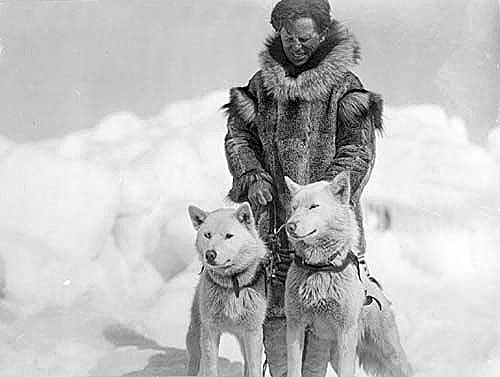
“Leonhard Seppala was a champion musher, a skilled athlete and one of the most iconic figures in Alaska’s history. When his city, Nome, Alaska, was struck with a disastrous epidemic during the worst possible time of year, Seppala’s dog team struck off into the harsh winter to retrieve the much-needed cure. He was, without question, an Alaskan hero – and he was born in Norway. Here’s a look at Leonhard Seppala’s life, and how he came to be such an important part of history:
Early years
Seppala was born in Lygenfjørd, Norway, on Sep. 14, 1877. He was raised amid harsh winter conditions – his town was located far, far north of the arctic circle. In addition to the weather conditions in which he was grew up, Seppala became a hard worker early on. His father was a blacksmith and a fisherman. Before he was old enough to learn his father’s trades, Seppala worked on the family farm. Once he turned 12 years old, he began sailing out to fish with his father. Seppala’s physical strength and endurance served him well, and he was able to earn a fair bit of money at his father’s side.
The gold rush
In his 20s, Seppala was working as a blacksmith in his hometown. A friend of his, who had traveled to Alaska in pursuit of gold, came back to Norway after having struck rich. Seppala, amazed by the wealth his friend had found on the other side of the world, decided to try his own hand at the gold trade. He packed up and traveled to Nome.
He wasn’t immediately successful. After moving, it took some time for the local prospecting company to even select him for a trip. When they finally did, the trip was something of a bust – there wasn’t much gold to be found, and Seppala began regretting his decision to travel to Alaska. Luckily, however, he decided to stick it out a little longer rather than travel back to Norway.
Dog sledding
Seppala’s choice to remain in Alaska turned out to be a pivotal moment in time: Shortly afterward, dog sledding started emerging as a sport. Dog sleds were already part of Alaska’s industrial culture – they were used mainly to transport items back and forth from gold sites – but during this time, people started to recognize the activity’s recreational potential. Seppala, who had worked with dog teams while prospecting for gold, was a fine fit for a musher. He was strong, but light and agile, so the dogs could reach top speed under his command.
His prospecting supervisor gave Seppala the task of raising a pack of sled dogs to compete in the All-Alaska sweepstakes races. The first year Seppala’s team competed, they failed to finish the race. The second year, however, Seppala and his team won first place, marking the beginning of Seppala’s reign as an Alaskan dog-sledding champion. Seppala and his team won race after race, securing legendary status incredibly quickly.
Diphtheria strikes
The winter of 1925 was treacherous. During the colder months, travel between Alaskan cities was nearly non-existent. Normally, this wasn’t that much of a problem, but this year it seemed to leave Nome doomed. When the city experienced a massive diphtheria outbreak, it quickly ran out of its stores of antitoxin. Children were coming down with the deadly disease at alarming rates, and there was no way to help them get better.
Nome desperately needed antitoxin, and there were stores to spare in Anchorage. Citizens in both towns teamed up to form a plan – a series of mushers would deliver the antitoxin, relay-style, to the struggling town. Seppala provided multiple teams of well-trained sled dogs, and he and a number of other drivers set out to collect the antitoxin. Although Seppala did perform a leg of the relay, it was another driver, Gunnar Kaasen, who completed the final part of the journey and delivered the antitoxin to Nome. The team Kaasen led was made up of dogs Seppala bred and raised himself, but Seppala kept his best dogs for his own team.
Aftermath of the relay
Though Seppala was pleased that the antitoxin made its way to Nome, he was bitter about the media attention Kaasen and his dog team received. They had only run a small part of the journey, and the lead dog, Balto, was, in Seppala’s eyes, not remotely worth the attention he was receiving. Seppala believed his lead dog, Togo, deserved the praise and recognition. Balto, he argued, was just a freight dog and had only pulled the sled for a small leg of the journey. Though Balto became the star of the Anchorage-Nome run, Seppala always maintained that Togo had been the journey’s real hero.
Seppala went on to become a world-renowned sled-dog breeder, and his work was so prolific that today, there is an elite breed of sled dogs known as “Seppala Siberian sled dogs.”(https://www.hurtigruten.us/must-read-articles/norway/leonhard-seppala-alaskas-norwegian-hero/)
And that my friends is a quick glimpse into the history of your own dog, and that of what we call “Seppala’s.”
A few dedicated breeders are answering the call. And that is to keep the line going as long as we can. And why does this matter? Because its not only to preserve history but to keep these magnificent animals alive and doing what they did better than any other working sled dogs.
We do it to give back, to what so many dogs have given us.
Dear PETA
By DENNIS MCCARTHY |PUBLISHED: March 23, 2018
It was Thursday evening in Anchorage, Alaska, and the Musher’s Banquet was in full swing. Everyone wanting a little extra fortitude had already bellied up to the no-host bar, and now they were sitting down to a rib-eye steak and mashed potatoes dinner.
March Madness, Alaskan style, was about to begin.
In a few minutes, 67 mushers – 51 men and 16 women – would have their names pulled out of a Mukluk boot, and told what their position would be for the start of the 46th-annual 1,000-mile dog sled race to Nome on Saturday morning in nearby Willow.
It was a big moment and everyone was in high spirits. No one was paying attention to the loud, incessant pounding at the door.
The elephant was trying to get in the room.
Last year four dogs died during the race, and doping charges were leveled against the winner. A documentary, “Sled Dogs,” painted a damning picture of alleged dog abuse by some mushers that scarred the race almost as bad as “Blackfish” did a few years ago to Sea World.
Under public pressure, Sea World phased out its killer whale shows and stopped breeding orca’s in captivity, but don’t expect the Iditarod to end its race, the mushers say. Their dogs aren’t being held captive, like the orcas. This is their home, where they were born and raised, where they thrive.
To the last man and woman, they will passionately tell you they love their dogs. Why else would they spend almost every waking minute of their day training and caring for them? They’re sure not doing it for the money. The vast majority of the mushers – 47 out of 67 – will make a whopping $1,049 in prize money, about enough to cover their straw bill to make beds for their dogs on the trail.
Cruelty, the musher’s say, would be NOT letting these fine-tuned animals born to run have this chance to show the world what incredible athletes they are.
Animal rights activists disagree, and so does my wife. I’m on the fence, so we flew up to Alaska earlier this month to see for ourselves. Normally, we stay clear of group tours, but to get access to the behind-the-scenes things we wanted to see we needed a local guide with connections to get us some backstage passes.
We found them with John Hall’s Alaska, which has this state wired for visitors. They gave us a telling, behind-the-scenes look at the Musher’s Banquet and preparations for the race, then flew us across the Arctic Circle to the best Northern Lights viewing in the world at a tiny outpost of a town called Bettles, population 10.
But it was in McGrath – the seventh of 22 checkpoints along the trail – that we found what we were looking for. After all the hoopla at the start of the race, all the autographs and mugging for the TV cameras, this is where it all gets real.
Just you and your dogs in the middle of nowhere.
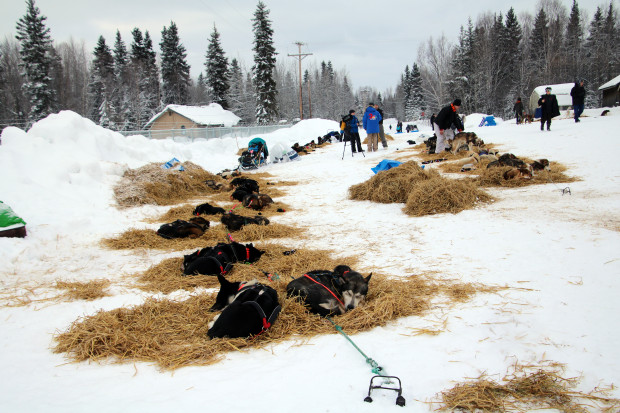
There was no welcoming party in McGrath as the mushers came off the trail to rest their dogs. There was only a handful of locals on their lunch break, a few Iditarod officials logging the musher’s arrival time, and a hundred or so weary dogs lying on scattered straw beds.
Their mushers had already taken off the booties they wear on the trail to protect their paws from abrasive snow and ice, and now they were being fed and hydrated before falling asleep.
At the Iditarod start three days earlier, these dogs had been yapping and howling their heads off, tugging at the lines, raring to go. Now, they were out like a light, snoring.
Watching it all carefully was Stu Nelson, chief veterinarian for the race. If anyone can be considered neutral in this cruelty to animals charge, it’s Nelson and the 45 volunteer veterinarians who perform routine exams and evaluations at each of the checkpoints.
They’ve been watching over these dogs since early February when they did blood tests and ECG recordings on every dog in the race. Then again two weeks before the race there was another veterinary physical. If these dogs had been abused and neglected, it would have shown up in the exams and blood tests.
Nelson knows the Iditarod is under a microscope this year, and his voice will carry a lot of weight in determining any changes Iditarod officials may make in the future, such as possibly shortening the race, adding more mandatory rest stops, and better monitoring of the conditions in kennels.
One of the main complaints is sled dogs spend most of the year chained to their doghouses, virtual prisoners, like the orcas were. It’s a sore point with mushers and race officials who tell a much different story.
“If we have any doubt about a dog’s well-being before or during the race, they’re out,” says Nelson, who added sick or injured dogs are flown home from the trail.
“Our only concern is the health of these dogs. We don’t care who wins or finishes.”
By the end of the race this year, won by Joar Leifseth Ulsom from Norway, one dog had died of pneumonia from the over 1,000 who had started the race.
One in a thousand – still too much.
As a kid, I remember watching the Iditarod on “Wide World of Sports,” and thinking what an incredible journey it must be for the mushers. I didn’t think much about the dogs.
Seeing them close up out on the trail this year, pulling with all their might in often freezing, driving snow conditions – their ears up listening for commands from the same familiar, trusted voice they’ve known since they were puppies – I finally realized what incredible athletes they are, and how this race is their Super Bowl and World Series.
But it was seeing the look in their eyes in McGrath as their mushers rubbed their cold, wet paws and gave each of them a special hug for doing a good job on the trail that pushed me off the fence.
I didn’t see the fear that comes with neglect, cruelty, and abuse. I saw love.
Dennis McCarthy’s column runs on Friday. He can be reached at dmccarthynews@gmail.com.
An Education from sled dogs
When you hear the word education, most people think of school be it K-12 or college. But there is so much more to learn about life than what you can glean from books and lectures. Things like building something with your hands or understanding nature in all its forms.
These are sadly becoming lost arts. Generations of young people never get to see more than cement streets and high rise apartments. And when they need something, they buy it at the mall or go without. Video games provide a false reality, but few kids do anything that builds real confidence. Being raised on participation trophies develops a false reality that leads to lifelong insecurities. Life isn’t a video game.
Life isn’t easy, it’s not supposed to be. Building character requires some hardship and pain. Lessons that mold and shape us into what we are. Hardship also teaches humility, which leads to compassion for others. It gives one the ability to consider another’s point of view.
Mushing dogs can do that for a young person, even an older person can learn from these remarkable animals. Learning to take care of them, understand them, and work in a team environment are huge lessons that apply to our own lives.
“We do not inherit the earth from our ancestors; we borrow it from our children.”
~Chief Seattle
Mom

Mom’s coat is tattered, ragged and worn,
It’s been that way since her pups were born.
So many miles are upon her face,
dusk to dawn trying to stay in the race.
She doesn’t care about anything else,
as she raises those pups by herself.
Sunny days they come and they go,
but most days it’s blowing snow.
The hunt is on, it’s time to go,
doesn’t matter if its blowing snow.
She leaves the den underneath the log,
and follows her nose through the frozen fog.
Returns at last with a nice big prize,
the pups are waiting with glowing eyes.
They feast upon natures tender meal,
mom goes without, as the puppies squeal.
She rests her snout on weary paws,
the taste of rabbit still upon her jaws.
Tomorrow she’ll have to do it again,
it’s soon forgotten as her pup’s cuddle in.
She licks each and every one,
loving licks from a mother’s tongue.
For they are her future heirs,
six lives from inside her lair.
Soon they will grow strong and brave,
and carry that legacy to the grave.
They will protect the family with all their might,
for this pack was built under mom’s guiding light.
New Hope Seppalas
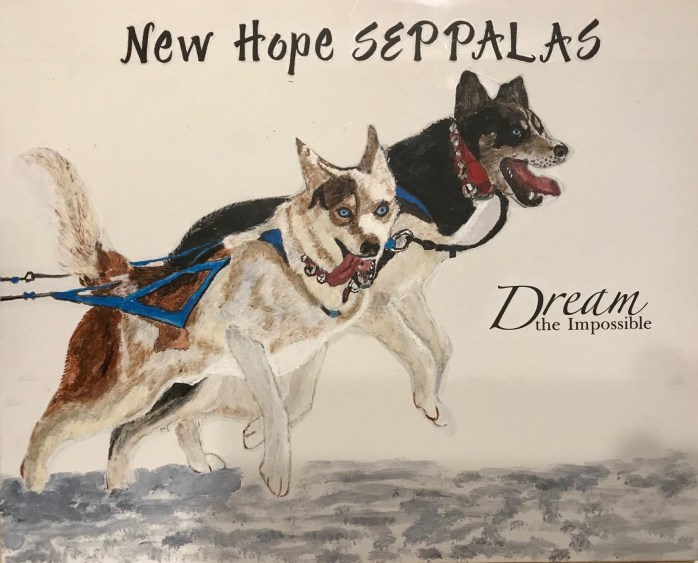
I’ve been known to dabble in art. Sometimes I see a photo and I want to paint it. That’s the case this time. I loved this photo and tried to do it justice.
To Dream
Now I lay me down to sleep,
to dream about the forest deep.
The smell of pine upon the trail,
my legs are strong and never fail.
I’ll trod upon unbroken snow,
then climb a trail, goats fear to go.
A river runs wild and free,
I’ll pad along, with it next to me.
It’s all so clear from long ago,
when we ruled the frozen snow.
I see and feel it all so clear,
the days when huskies had no peers.
I dream a life I’ve never had,
it’s part of me, but I’m never sad.
One day soon I’ll go back home,
to the fields of snow where huskies roam.
Until then it’s you and me,
I’ll do my best to help you see.
A better life lies just ahead,
there’s more to life than just a sled.
I’ll take you to a better place,
Even if you’re from the human race.
All I ask is you believe in me,
and I’ll teach your spirit to be free.
Smoke
Journey with Siberians

I have spent a great deal of time with my dogs. I’ve raised them from mere pups, paid the vet bills, and given my time to train and try to understand them. I’ve pretty much re-arranged my whole life in order to have them be happy and next to me.
I imagine to most people this may seem obsessive and a tad off the deep end. I might agree with them without the knowledge that my own journey has given me. At first, I really didn’t even understand it myself but then a friend who races Siberians has a moto for her dogs, “Spiritual Enlightenment Through Sled Dogs.”
When I read that slogan, it was an epiphany moment in my life. It was the moment that everything I’ve done came into focus. The “Why?” has been answered and I want to share that if possible.
So, what exactly does “Spiritual Enlightenment” mean?
Well, its not a place on a map you can find with your GPS. It’s reaching various degrees of understanding about who you are, what life is about, and maybe even a reason why you are here on earth. It’s a change within yourself brought on by any number of factors. It’s not mumbo-jumbo, its knowledge and understanding things on a new level.
“When people undergo spiritual enlightenment, they experience a change within themselves. Although everyone has their own unique experiences, there are some common elements that we all share.
Many of our perceptions have been distorted, such as the illusions created by our society, the state, consumerism, etc. Spiritual enlightenment has strong, direct, spiritual implications and is a result to being more aware of one’s spirituality and the ability to see past these illusions or fallacies.” ((http://dreamcatcherreality.com/spiritual-enlightenment/))
Here are a few ways the Siberian People have helped me on our journey together:
- “Revisiting Childhood and Parental Relationships
All people that undergo a huge spiritual transformation revisit their early years of life. Healing our childhood’s traumas is a vital requirement for deep healing.
Since we especially develop in our first years of life, any possible trauma greatly affects our perception of life and other related things.
In order to have a more accurate perspective on life and a better understanding of this reality, we must reexamine the basic notions upon which we have built our world on, in our early years of life.
Moreover, we have to develop healthier and stronger relationships with our families and, especially, with our parents, who have played such a huge role in what we have become today.
Just by attempting to heal old wounds or repair damaged relationships, one exhibits intense growth and maturity, which is a crucial aspect to one’s awakening. This will, inevitably, lead to spiritual enlightenment.” (1)
Siberians being very social pack animals exhibit many family traits similar to our own. To observe them in day to day life you will find some jealousy, hoarding, competition, loneliness, joy, and compassion to name a few. The main difference from us is they do not hate, kill each other, and have a high capacity to forgive. This not just pertain to their own pack. It is offered to all but they will not tolerate being abused by other dogs. This alone is food for thought at having a better outlook on our own lives. A glimpse into living more in harmony with each other.
- “Treading Uncharted Territories
While growing up, we tend to build a life that is equivalent to a bubble. However, it is unhealthy to stay within that bubble, as it severely limits our experience of the world. We all have to take that first step in venturing into the unknown and make a place for ourselves in the world. Once we start to explore the world and stop confining ourselves within our comfort zones, we star growing in previously unimagined ways, and this is one of the necessary steps we must take in order to experience true awakening.” (2)
Siberians have a natural desire to explore and tread uncharted territories. After all, this is what they did for thousands of years. They got me off the sofa and out on the streets. The desire to exercise and see new things never stops. They have gotten me out of several comfort zones. Hooking them to a bike will certainly leave you with eyes wide open!
- “Understanding and Eliminating Dysfunctional Relationships
Many people, despite being aware, stay within their dysfunctional relationships and try to find justification for their decisions.
This habit of deceiving your own self negates growth and perpetuates other dysfunctional habits in your life. Being surrounded by positive influences is extremely important, as we tend to absorb more than we can imagine from our interactions with those around us.
The ability to distinguish unhealthy relationships is a huge part of your awakening and using the newly acquired understanding — by eliminating these unhealthy relationships — helps you in achieving spiritual enlightenment.” (3)
For me most people are detrimental to the soul. They want to control your life in one form or another. And at best they waste your time, and how much time in this life do you have to waste? So many believe that “Their Way” is best and all should follow. The lesson learned from such independent creatures as the Siberian is simple. They know who and what they are. You either accept them or go away. Either one is totally acceptable because they are quite happy being Siberians. No matter how hard you try, you will not change them into something they are not.
- “Being Aware of the Gift that is Health
A vast majority of people don’t understand the blessing of a good health — physical, mental and social. Most of us only understand this important gift when our health starts to deteriorate and, for the first time in our lives, we understand that health is priceless.
Those of us who understood the significance of health and actively make an effort towards maintaining it (by exercising, eating healthy, and so on), are a part of a minority.
This realization is a huge step for those moving towards spiritual enlightenment.” (4)
As mentioned before Siberians demand exercise. That means you will be getting your exercise as well. Siberians for the most part are incredibly healthy dogs. That in itself should be a lesson to us from these natural born athletes.
- “Developing the Ability to Learn Perpetually
There are people, although small in numbers, who are always looking to learn something new from their experiences and interactions.
Such people have a desire to better comprehend the complexities of life and the world around them. Therefore, they seek knowledge and are open to learn new things, simply because it brings them pleasure and a sense of fulfillment.
Learning, in itself, is an evolutionary process – one that complies with the nature of our life. Only those who are willing to learn and possess a burning desire to create their own educated perspectives will head closer towards attaining enlightenment.” (5)
Siberians have given me a burning desire to understand everything I can about them. This has led me to learn many new things. I don’t think anyone can ever know it all about Siberians. I have my work cut out for me.
- “Exuding Positivity
Many people are subject to self-sabotage and they practice self-defeatist practices and beliefs that only impede with their own growth.
One of the most important steps towards becoming spiritually aware is the realization that thoughts and emotions are very powerful.
A person that is completely engulfed in negativity will never be able to experience happiness or joy, no matter how beautiful their lives may be.
Those who can be true to themselves and seek joy in their experiences, can truly attain spiritual enlightenment.” (6)
The Siberians excel at this. They are positive about everything in life that surrounds them. With no fear they tackle any obstacle regardless of the outcome. They try, and if they fail they forget about it and try again.
- “Understanding the Significance of Life
Ask people about their jobs and most will tell you just how much they hate it.
If you value your career so much and you think that your work is what defines you, then why not, at least, choose something that you love doing?
Unfortunately, though, most people choose to work in stressful environments that deprive them of creativity or joy, and their sole motivation to continue is the next paycheck. Pursuing money and choosing a career on those basis, usually leads to everything else but joy.
Instead, you should understand that no matter what you choose to do, as long as you make an honest effort and your work brings you pleasure, money will always come.
Those who have understood what the truly important things are, and actively seek joyous experiences in their work and personal lives, are the ones who have developed enough understanding to move towards spiritual enlightenment.” (7)


The Siberians understand the significance of life better than anyone. With short lives compared to ours, they live each and every day in the “Moment.” They don’t worry about yesterday, or tomorrow. Each minute is lived to its fullest. They find joy in simply being alive.
To run with the Siberians is a spiritual experience. You get first hand knowledge of what’s its like to be a husky. You are part of a team working together to enjoy a few minutes, or hours of pure freedom. A chance to commune with nature and be apart of something greater than yourself.
Long may you run!
Citations: 1-7, Internet, (http://dreamcatcherreality.com/spiritual-enlightenment/)
My Book Promotion (Limited Time)
For a limitied time you can get my book on Amazon for Kindle. Currently its $1.99 and goes up a little more each day.
What do you see?


Do you see some cute puppies, more or less like any other? Did you know that there is more than meets the eye inside of that cute exterior?
I’ll tell you what I see. I see the reincarnation of legends.
A dog breed above all others…a Seppala Siberian Sled Dog. The original working dogs of Leonhard Seppala that led to every Siberian Husky in the world today. If you were to write down a list of specifications for a new breed of dog. According to my friend Mr. Mick Brent this is what you might come up with when you talk about Siberians:
- Survive and function effectively at temperatures down to -50 degrees C without any artificial aids.
- Pull a lightly laden sled tirelessly day after day over vast distances in arctic/sub-arctic conditions and enjoy it!
- Survive and thrive on the bare minimum of food.
- Be intelligent enough to take instructions from the sled driver, and also intelligent to ignore such instructions if they are likely to lead the team into danger.
- Survive and function effectively at temperatures up to 35 degrees C
- Be capable of hunting and catching its own food if necessary.
- Be able to live happily with large numbers of other dogs with minimal friction.
- Love people in general and children in particular so that they can be used in winter to sleep with the children and keep them warm.
- Look absolutely beautiful at all times.
- Combine an infinite capacity and appetite for work with an ability to sleep anywhere and everywhere at the drop of a hat.
- Be capable of jumping/climbing high fences.
- Be capable of digging escape tunnels worthy of “The Great Escape” or “Colditz”
- Be capable (if given the opportunity) of destroying almost anything in seconds.
- Combine the characteristics of an iron-hard sled dog with that of the softest lap dog.
I also see the results of thousands of years of breeding before the Siberian came into existence. I see in these little bodies unknown potential and the ability to do great things, much like the dogs that made the serum run to Nome in 1925.
I see our promise in living flesh that this line of dogs will not go quietly into the night. That they will continue to impress and perform as working dogs and family members for years to come.
But it doesn’t come easy these days as their numbers continue to decline. For those of us who love them that is not acceptable. So we do all we can to ensure the legend will continue for others to experience just what makes them so special.
With each new birth…the legend continues.
That’s what I see when I look at these puppies.
And that’s what Poland Springs Kennel is about.
Zen of the Husky

I’ve mentioned before that husky behaviors are not constant. Most people would expect that once the puppy has reached maturity that his/her personality is now set, and will remain that way for the life of the dog. My own experience with many breeds, led me to believe this was the normal way of dogdom.
- Puppyhood ends between six and 18 months of age.
- Adolescence starts between six and 18 months of age.
- Adulthood starts between 12 months and three years of age.
- The senior years begin between six and 10 years of age.
Enter the Siberian Husky who has shown me once again that I need to throw out the book of common dogdom. Normal or expected doesn’t apply to the Siberians. At least not the ones I’ve known. In my dogs the puppy stage ended at 6 months. From 6-18 months was the adolescent teen-age type attitudes of testing, and trying out what they could get away with.
18-24 months the lessons had been learned if you bother to train them, and things would be stable for a while. At 24 months this seemed to be the turning point where most (not all) destructive chewing and silly behavior ended. It was like a switch was flipped in their brains, and I could tell they had reached a new level of understanding.
Their Siberian personalities were pretty stable at that point, and I thought this would be how they act for the rest of their lives give or take some minor changes. Not so… because the one thing I’ve learned is that huskies do not remain constant in their thinking. They continue to develop mentally, and each one has a few quirks that make them unique.
My example of this is Mr. Cooper. He turned 3 years of age this past December. Between 2 and 3 he had established a pretty stable personality. I was pretty confident on his abilities to pull and run hard. He was in fact a great teacher to my year younger girl. My best guess is Cooper and I have covered over 2000 miles in the last 3 years. Either by foot, bike, or cart. He’s never shirked a task and seemed to really enjoy just plain running no matter the reason.
In the last two months things began to change. I saw them coming because I pay attention to every detail about my dogs when we run. I can tell by their gait and body language if they are in good health. I can tell from the way they act, and how they look at me what the state of their mind is.
In Cooper’s case he has always gotten enough exercise. It is very apparent now, that this is not enough to keep him truly happy.
The tell-tale signs are finding him sleeping in his dog house more than usual. The look on his face shows some sadness in his eyes. He actually escaped by eating a hole in the weak spot in the fence. In three years he’s never escaped except by accident. But the most telling is during our recent runs.
At first it started as little things like losing focus and wanting to go after things that long since have been ignored. Next was ignoring commands to go the direction HE wanted to take, not mine. I could control these, but I’d never had to do it before. These continued to get worse even though controllable. Then the final one is during a run he would just slow down and come to a stop like he was exhausted.
I had no proof if he was exhausted, but I always gave him the benefit of the doubt and would stop for a rest break and water. Usually in a few minutes he would be good to go again. But this trait has continued to get worse.
I reached the point where I was pretty sure it wasn’t exhaustion but something else. The clues were all there but I wasn’t putting it together. Last night I proved for a fact what it is that’s bothering him. Its trail boredom, or in my case Urban boredom. It took 3 years and several thousand miles to do it but that’s what it is.
I proved it by testing him. Last night about a mile into the run he pulled up right after I wouldn’t go the way he wanted. It was cold and windy so it was not heat related. If he could go 5 miles before there was no way that 1 mile at normal speed he should be exhausted.
I turned the rig around and went back the way we came. I let him go the way he’d wanted and he took off like the wind, now that we were heading the way he wanted…everything was fine.
The solution for this is easy. I have to do more work by loading up the rig and dogs. Then find a new place for us to run. I think huskies run because that is how they get adventure. The mistake is to think that they love working. Just like us they work to get something they need. In our case we work to make money to get what we need.
Siberians work to get something they need. And that is a new adventure.
Why? Usually the clue to husky behaviors can be found in the history of the breed. For thousands of years dogs with the desire to travel were bred, and those that preferred to lay around were of no use and thus not bred. That’s how a breeds traits are developed and ingrained. Adventurous men needed adventurous dogs. The Siberian is the results of what they did.
This might be the reason so many people have trouble integrating them into urban life. It takes a lot of work to keep these dogs happy. The urban environment is not made for them, and it’s up to us owners to figure out how to meet their needs the best we can.
They are hard to undestand at times and even that takes some work.
It’s the way of the Husky.

