Life with Siberian Huskies
The Journey is more important than the destination
The Road Less Traveled:


This is a true tale about the road to understanding a Siberian. I can’t speak for everyone, because our trails and dogs are not all the same. Even so, I think there are some common things that happen as you start out with one of these old souls.
The first part of my journey was falling in love with how a Siberian looks. Not hard to do at all because it was one of the most beautiful creatures nature has ever produced. Not only do they have beautiful colors and markings…it’s the eyes that get me.
They eyes are the window to the soul. These huskies have the most enticing eyes. Eyes not only of color, but those that exude intelligence. They are in some ways the eyes of the wolf.
Burning into you, examining everything around them, and looking deep into your own gaze… with a judgmental and questioning…
View original post 1,021 more words
Seppala Siberian Sleddogs & Poland Spring Kennels:

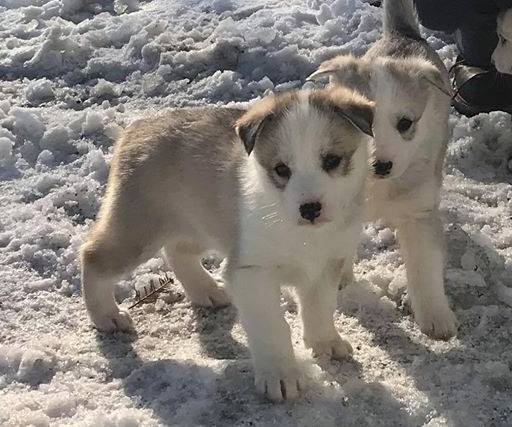
Part of what makes these dogs so special is their history. They have a rich history that spans 93 years from the famous serum run that saved Nome. It’s actually longer but that is the date I’ve picked. That is the date that they made their mark on the world.
Soon after that remarkable feat, fame brought the dogs and Leonhard Seppala to the lower 48. When he retired from racing he left all his dogs with Elizabeth Ricker at Poland Spring Maine. The same name of our kennels, a great name sake that pays homage to these amazing dogs. From that point on the Siberian Husky was here to stay. You can now find Siberians almost everywhere in the world. But you cannot find Seppala’s unless you look very hard and have a bit of luck.
A small group of dedicated kennels and owners have over the years done their best to keep this original line alive and as pure as possible. A few folks have dedicated their whole lives to it. Many have sacrificed a lot to keep this line as pure as possible.
You might wonder why? What would drive someone to dedicate so much to some dogs? I can’t answer that for anyone but myself. There is something special about them. There is something present that I’ve never seen in other breeds. It’s intoxicating and makes you want to never lose it. I want to share that feeling with all who will listen, and hopefully want to find out for themselves, what it is to be smitten by them.
For if that happens, they will never again be in danger of disappearing from this world. And that is what drives me to see them flourish once again. That is what drives PSK to provide the best Seppalas we can. Dogs rich in pedigree and work ethic. Dogs that can work as hard as they love their families.
To understand a Siberian, one must understand their history. To understand what makes a Seppalas special one must understand their unique history and lines. Those pure working lines they came from, that made them famous in the first place.
So, with that I’m going to start sharing some of that history in news clippings and insights from those who came before. This is what PSK is about. It’s not about making money it’s about the dogs. It’s about a unique heritage that must be preserved.
See or dogs on FaceBook: Poland Spring Kennels -PSK
Gaze Upon New life
Seppala puppies at 4.5 weeks old.
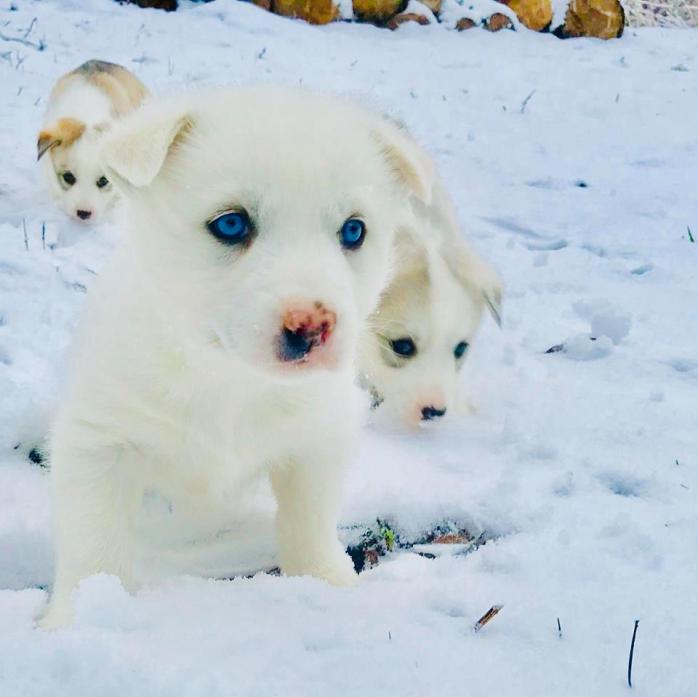

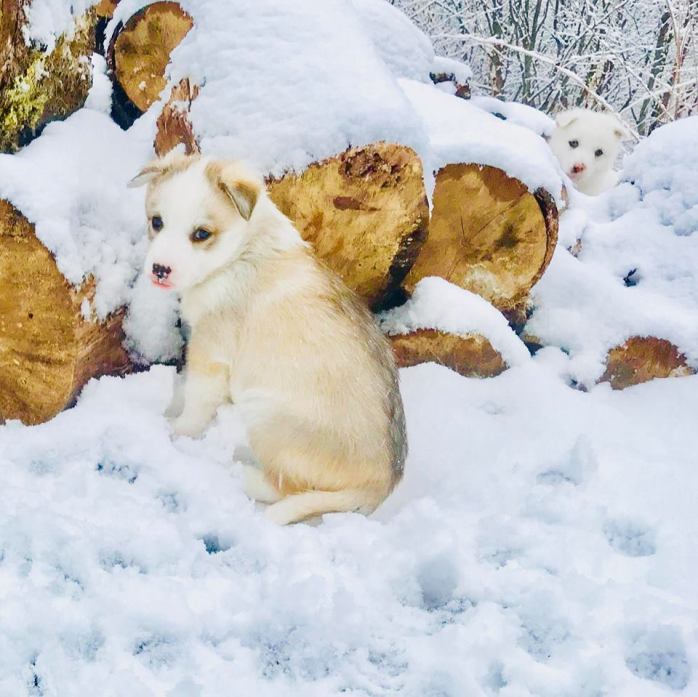
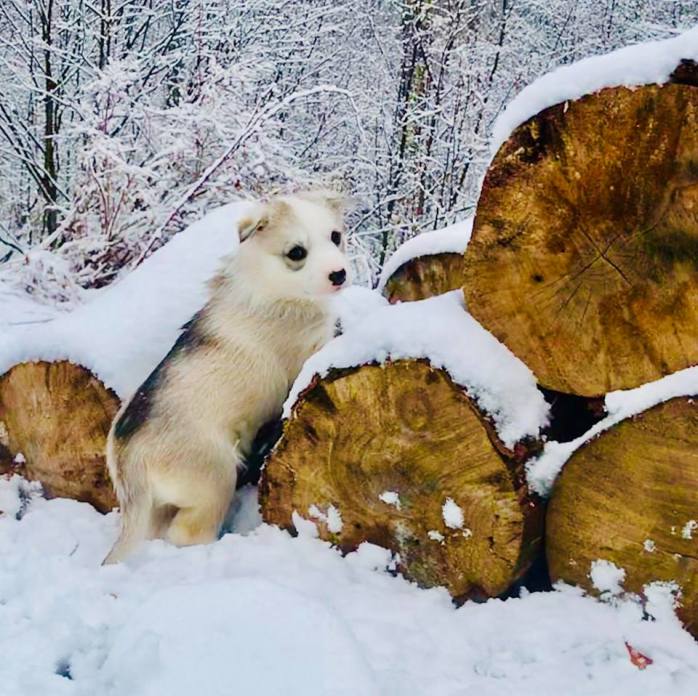

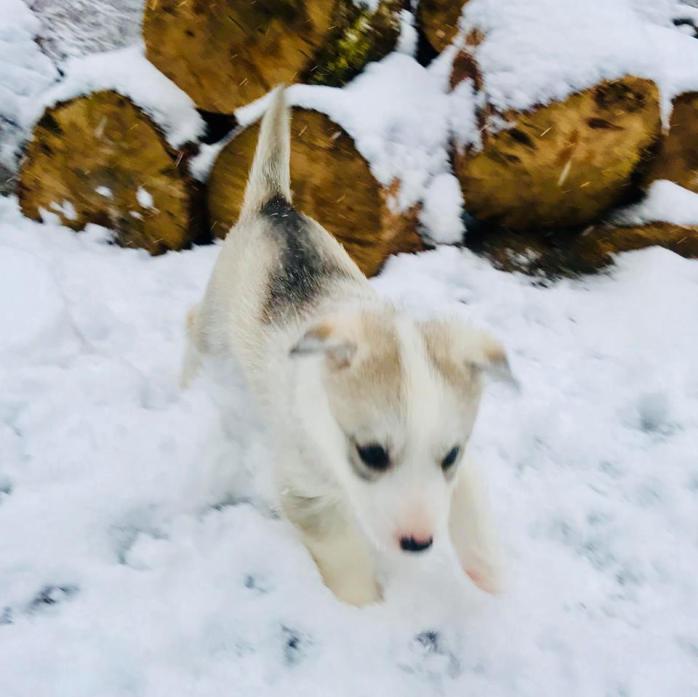
You may call me crazy or worse, but I’ll tell you what I think about huskies. I believe they never really die. Oh, sure their bodies may pass, but the memories they have of previous lives does not. I can say this because I’ve seen puppies who have way more knowledge than they should have for being alive just a few weeks.
Thousands of hours spent with them only increases my view. They are not normal dogs in any sense of the word. They are old souls in new bodies ready to again tackle the world.
They are fearless, confident, and ready for any challenge because they have done it before in a previous life. The husky is indeed a remarkable beast.
The proof of this is in their eyes. If the eyes are the window to the soul, you’ll see none purer. You will see fields of snow, impossible storms, and the willpower it takes to survive the cruelest places on earth.
It’s all there if you look. It’s what they are, and there is no denying it. A husky will always be true to themselves. For to do less brings discredit on their race. These Siberian People.
The Dawgs of Winter

By grace of God and sky above,
blue eyes gaze upon the snow.
The world is frozen, silent and deep,
as moons pale light, begins to creep.
Deep In his cave, the grizzly slumbers,
while birds have left, a chasing summer.
The roaring river has turned to glass,
no sound disturbs it, as they pass.
Winding through a trail of pines,
where moonlight often, fails to shine.
The dogs of winter in single file,
strong legs driving, eating up the miles.
Heading down ole Crawford pass,
the smell of smoke, home at last.
The old man waits behind the door,
Jug of whiskey, on the cabin floor.
Dawgs bound up on the porch,
eyes aglow from the lanterns torch.
From inside sounds a mighty guffaw,
with raspy voice, like a rusty chainsaw.
Bout time you dawgs got back,
as he opens the old door a crack.
They jump and dance, and bust right in,
excited so much, they whine and spin.
With twinkle of eye, and miners hat,
he dishes up bowls of stew, fatback.
They share a meal of partnership,
it’s not about any ownership.
In summer they run, wild and free,
in winter they come work for a fee.
They pull his heavy sleds of ore,
year after year, just like before.
Out here in the middle of nowhere,
nothing is free, but cold Alaskan air.
The dawgs of winter made a pact,
that old man can attest the fact.
Nuttin but family here in my shack,
The dawgs of winter are back.
The Siberian Husky
If you know exactly what, and who you are at all times.
If you live each moment of everyday to the fullest.
If you have no fears about tomorrow, or regrets about yesterday.
If you love others as much or more than yourself.
You might be a Siberian Husky…Baby you were born to run!
A little slide show I made featuring the music of Bruce Springsteen.
What is a Seppala Siberian Sled Dog?

There is much more to the modern-day Siberian than most people understand. Not much is known by those outside of the mushing world. Those of you who have a Siberian Husky may not even know how they came about. The mushers who actually live the life… run dogs in races, are familiar with the history of the breed, know about the legend of a man. The man was named Leonard Seppala and he invented the Siberian husky you may own today. They may have changed over the years but the DNA of his dogs is in all Siberians today.
Thanks to many dedicated people, champions who have given more than most, and who have worked very hard to preserve the true descendants, they still exist. Some dedicated their whole lives to this effort. The dogs that share a direct and constant lineage to Seppalas original foundation dogs still exist today in limited numbers.
These are in fact what is known as “Seppala Siberian Sled Dogs.” Dogs that’s pedigree’s trace unbroken back to the foundation dogs of Leonhard Seppala himself. They are not anywhere close to being as diluted as the modern-day Siberian. They are the “Royals” of the husky kingdom. Their purpose is to be the top of the working class. Sled dogs supreme if not in speed but in tenacity, with a much milder temperament and willingness to be trained. World class athletes that still posses a coat that can survive temperatures that make Alaskan Huskies need coats.
Rather than re-invent the wheel I found this next part to be a nice summary if you are still interested in learning more. A bit of history about the legend of Leonhard Seppala and that husky sitting at your feet as you read it.
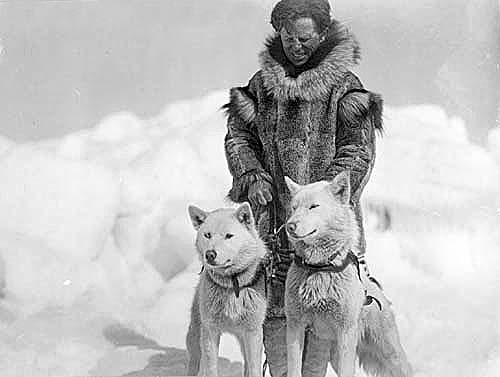
“Leonhard Seppala was a champion musher, a skilled athlete and one of the most iconic figures in Alaska’s history. When his city, Nome, Alaska, was struck with a disastrous epidemic during the worst possible time of year, Seppala’s dog team struck off into the harsh winter to retrieve the much-needed cure. He was, without question, an Alaskan hero – and he was born in Norway. Here’s a look at Leonhard Seppala’s life, and how he came to be such an important part of history:
Early years
Seppala was born in Lygenfjørd, Norway, on Sep. 14, 1877. He was raised amid harsh winter conditions – his town was located far, far north of the arctic circle. In addition to the weather conditions in which he was grew up, Seppala became a hard worker early on. His father was a blacksmith and a fisherman. Before he was old enough to learn his father’s trades, Seppala worked on the family farm. Once he turned 12 years old, he began sailing out to fish with his father. Seppala’s physical strength and endurance served him well, and he was able to earn a fair bit of money at his father’s side.
The gold rush
In his 20s, Seppala was working as a blacksmith in his hometown. A friend of his, who had traveled to Alaska in pursuit of gold, came back to Norway after having struck rich. Seppala, amazed by the wealth his friend had found on the other side of the world, decided to try his own hand at the gold trade. He packed up and traveled to Nome.
He wasn’t immediately successful. After moving, it took some time for the local prospecting company to even select him for a trip. When they finally did, the trip was something of a bust – there wasn’t much gold to be found, and Seppala began regretting his decision to travel to Alaska. Luckily, however, he decided to stick it out a little longer rather than travel back to Norway.
Dog sledding
Seppala’s choice to remain in Alaska turned out to be a pivotal moment in time: Shortly afterward, dog sledding started emerging as a sport. Dog sleds were already part of Alaska’s industrial culture – they were used mainly to transport items back and forth from gold sites – but during this time, people started to recognize the activity’s recreational potential. Seppala, who had worked with dog teams while prospecting for gold, was a fine fit for a musher. He was strong, but light and agile, so the dogs could reach top speed under his command.
His prospecting supervisor gave Seppala the task of raising a pack of sled dogs to compete in the All-Alaska sweepstakes races. The first year Seppala’s team competed, they failed to finish the race. The second year, however, Seppala and his team won first place, marking the beginning of Seppala’s reign as an Alaskan dog-sledding champion. Seppala and his team won race after race, securing legendary status incredibly quickly.
Diphtheria strikes
The winter of 1925 was treacherous. During the colder months, travel between Alaskan cities was nearly non-existent. Normally, this wasn’t that much of a problem, but this year it seemed to leave Nome doomed. When the city experienced a massive diphtheria outbreak, it quickly ran out of its stores of antitoxin. Children were coming down with the deadly disease at alarming rates, and there was no way to help them get better.
Nome desperately needed antitoxin, and there were stores to spare in Anchorage. Citizens in both towns teamed up to form a plan – a series of mushers would deliver the antitoxin, relay-style, to the struggling town. Seppala provided multiple teams of well-trained sled dogs, and he and a number of other drivers set out to collect the antitoxin. Although Seppala did perform a leg of the relay, it was another driver, Gunnar Kaasen, who completed the final part of the journey and delivered the antitoxin to Nome. The team Kaasen led was made up of dogs Seppala bred and raised himself, but Seppala kept his best dogs for his own team.
Aftermath of the relay
Though Seppala was pleased that the antitoxin made its way to Nome, he was bitter about the media attention Kaasen and his dog team received. They had only run a small part of the journey, and the lead dog, Balto, was, in Seppala’s eyes, not remotely worth the attention he was receiving. Seppala believed his lead dog, Togo, deserved the praise and recognition. Balto, he argued, was just a freight dog and had only pulled the sled for a small leg of the journey. Though Balto became the star of the Anchorage-Nome run, Seppala always maintained that Togo had been the journey’s real hero.
Seppala went on to become a world-renowned sled-dog breeder, and his work was so prolific that today, there is an elite breed of sled dogs known as “Seppala Siberian sled dogs.”(https://www.hurtigruten.us/must-read-articles/norway/leonhard-seppala-alaskas-norwegian-hero/)
And that my friends is a quick glimpse into the history of your own dog, and that of what we call “Seppala’s.”
A few dedicated breeders are answering the call. And that is to keep the line going as long as we can. And why does this matter? Because its not only to preserve history but to keep these magnificent animals alive and doing what they did better than any other working sled dogs.
We do it to give back, to what so many dogs have given us.
Dear PETA
By DENNIS MCCARTHY |PUBLISHED: March 23, 2018
It was Thursday evening in Anchorage, Alaska, and the Musher’s Banquet was in full swing. Everyone wanting a little extra fortitude had already bellied up to the no-host bar, and now they were sitting down to a rib-eye steak and mashed potatoes dinner.
March Madness, Alaskan style, was about to begin.
In a few minutes, 67 mushers – 51 men and 16 women – would have their names pulled out of a Mukluk boot, and told what their position would be for the start of the 46th-annual 1,000-mile dog sled race to Nome on Saturday morning in nearby Willow.
It was a big moment and everyone was in high spirits. No one was paying attention to the loud, incessant pounding at the door.
The elephant was trying to get in the room.
Last year four dogs died during the race, and doping charges were leveled against the winner. A documentary, “Sled Dogs,” painted a damning picture of alleged dog abuse by some mushers that scarred the race almost as bad as “Blackfish” did a few years ago to Sea World.
Under public pressure, Sea World phased out its killer whale shows and stopped breeding orca’s in captivity, but don’t expect the Iditarod to end its race, the mushers say. Their dogs aren’t being held captive, like the orcas. This is their home, where they were born and raised, where they thrive.
To the last man and woman, they will passionately tell you they love their dogs. Why else would they spend almost every waking minute of their day training and caring for them? They’re sure not doing it for the money. The vast majority of the mushers – 47 out of 67 – will make a whopping $1,049 in prize money, about enough to cover their straw bill to make beds for their dogs on the trail.
Cruelty, the musher’s say, would be NOT letting these fine-tuned animals born to run have this chance to show the world what incredible athletes they are.
Animal rights activists disagree, and so does my wife. I’m on the fence, so we flew up to Alaska earlier this month to see for ourselves. Normally, we stay clear of group tours, but to get access to the behind-the-scenes things we wanted to see we needed a local guide with connections to get us some backstage passes.
We found them with John Hall’s Alaska, which has this state wired for visitors. They gave us a telling, behind-the-scenes look at the Musher’s Banquet and preparations for the race, then flew us across the Arctic Circle to the best Northern Lights viewing in the world at a tiny outpost of a town called Bettles, population 10.
But it was in McGrath – the seventh of 22 checkpoints along the trail – that we found what we were looking for. After all the hoopla at the start of the race, all the autographs and mugging for the TV cameras, this is where it all gets real.
Just you and your dogs in the middle of nowhere.
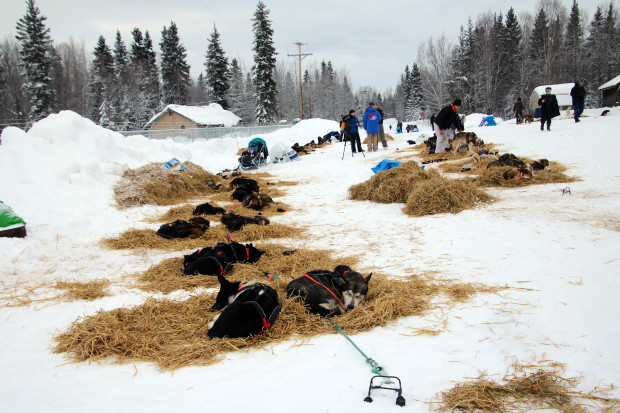
There was no welcoming party in McGrath as the mushers came off the trail to rest their dogs. There was only a handful of locals on their lunch break, a few Iditarod officials logging the musher’s arrival time, and a hundred or so weary dogs lying on scattered straw beds.
Their mushers had already taken off the booties they wear on the trail to protect their paws from abrasive snow and ice, and now they were being fed and hydrated before falling asleep.
At the Iditarod start three days earlier, these dogs had been yapping and howling their heads off, tugging at the lines, raring to go. Now, they were out like a light, snoring.
Watching it all carefully was Stu Nelson, chief veterinarian for the race. If anyone can be considered neutral in this cruelty to animals charge, it’s Nelson and the 45 volunteer veterinarians who perform routine exams and evaluations at each of the checkpoints.
They’ve been watching over these dogs since early February when they did blood tests and ECG recordings on every dog in the race. Then again two weeks before the race there was another veterinary physical. If these dogs had been abused and neglected, it would have shown up in the exams and blood tests.
Nelson knows the Iditarod is under a microscope this year, and his voice will carry a lot of weight in determining any changes Iditarod officials may make in the future, such as possibly shortening the race, adding more mandatory rest stops, and better monitoring of the conditions in kennels.
One of the main complaints is sled dogs spend most of the year chained to their doghouses, virtual prisoners, like the orcas were. It’s a sore point with mushers and race officials who tell a much different story.
“If we have any doubt about a dog’s well-being before or during the race, they’re out,” says Nelson, who added sick or injured dogs are flown home from the trail.
“Our only concern is the health of these dogs. We don’t care who wins or finishes.”
By the end of the race this year, won by Joar Leifseth Ulsom from Norway, one dog had died of pneumonia from the over 1,000 who had started the race.
One in a thousand – still too much.
As a kid, I remember watching the Iditarod on “Wide World of Sports,” and thinking what an incredible journey it must be for the mushers. I didn’t think much about the dogs.
Seeing them close up out on the trail this year, pulling with all their might in often freezing, driving snow conditions – their ears up listening for commands from the same familiar, trusted voice they’ve known since they were puppies – I finally realized what incredible athletes they are, and how this race is their Super Bowl and World Series.
But it was seeing the look in their eyes in McGrath as their mushers rubbed their cold, wet paws and gave each of them a special hug for doing a good job on the trail that pushed me off the fence.
I didn’t see the fear that comes with neglect, cruelty, and abuse. I saw love.
Dennis McCarthy’s column runs on Friday. He can be reached at dmccarthynews@gmail.com.
An Education from sled dogs
When you hear the word education, most people think of school be it K-12 or college. But there is so much more to learn about life than what you can glean from books and lectures. Things like building something with your hands or understanding nature in all its forms.
These are sadly becoming lost arts. Generations of young people never get to see more than cement streets and high rise apartments. And when they need something, they buy it at the mall or go without. Video games provide a false reality, but few kids do anything that builds real confidence. Being raised on participation trophies develops a false reality that leads to lifelong insecurities. Life isn’t a video game.
Life isn’t easy, it’s not supposed to be. Building character requires some hardship and pain. Lessons that mold and shape us into what we are. Hardship also teaches humility, which leads to compassion for others. It gives one the ability to consider another’s point of view.
Mushing dogs can do that for a young person, even an older person can learn from these remarkable animals. Learning to take care of them, understand them, and work in a team environment are huge lessons that apply to our own lives.
“We do not inherit the earth from our ancestors; we borrow it from our children.”
~Chief Seattle
Mom

Mom’s coat is tattered, ragged and worn,
It’s been that way since her pups were born.
So many miles are upon her face,
dusk to dawn trying to stay in the race.
She doesn’t care about anything else,
as she raises those pups by herself.
Sunny days they come and they go,
but most days it’s blowing snow.
The hunt is on, it’s time to go,
doesn’t matter if its blowing snow.
She leaves the den underneath the log,
and follows her nose through the frozen fog.
Returns at last with a nice big prize,
the pups are waiting with glowing eyes.
They feast upon natures tender meal,
mom goes without, as the puppies squeal.
She rests her snout on weary paws,
the taste of rabbit still upon her jaws.
Tomorrow she’ll have to do it again,
it’s soon forgotten as her pup’s cuddle in.
She licks each and every one,
loving licks from a mother’s tongue.
For they are her future heirs,
six lives from inside her lair.
Soon they will grow strong and brave,
and carry that legacy to the grave.
They will protect the family with all their might,
for this pack was built under mom’s guiding light.
 Life with Siberian Huskies