Life with Siberian Huskies
The Journey is more important than the destination
The “Y” litter
I don’t think I’ve mentioned the four new huskies that entered the world in Caribou Maine. 72% Seppalas and the offspring of two lead dogs. Bred together to reduce the COI, and hopefully to produce more lead dogs.
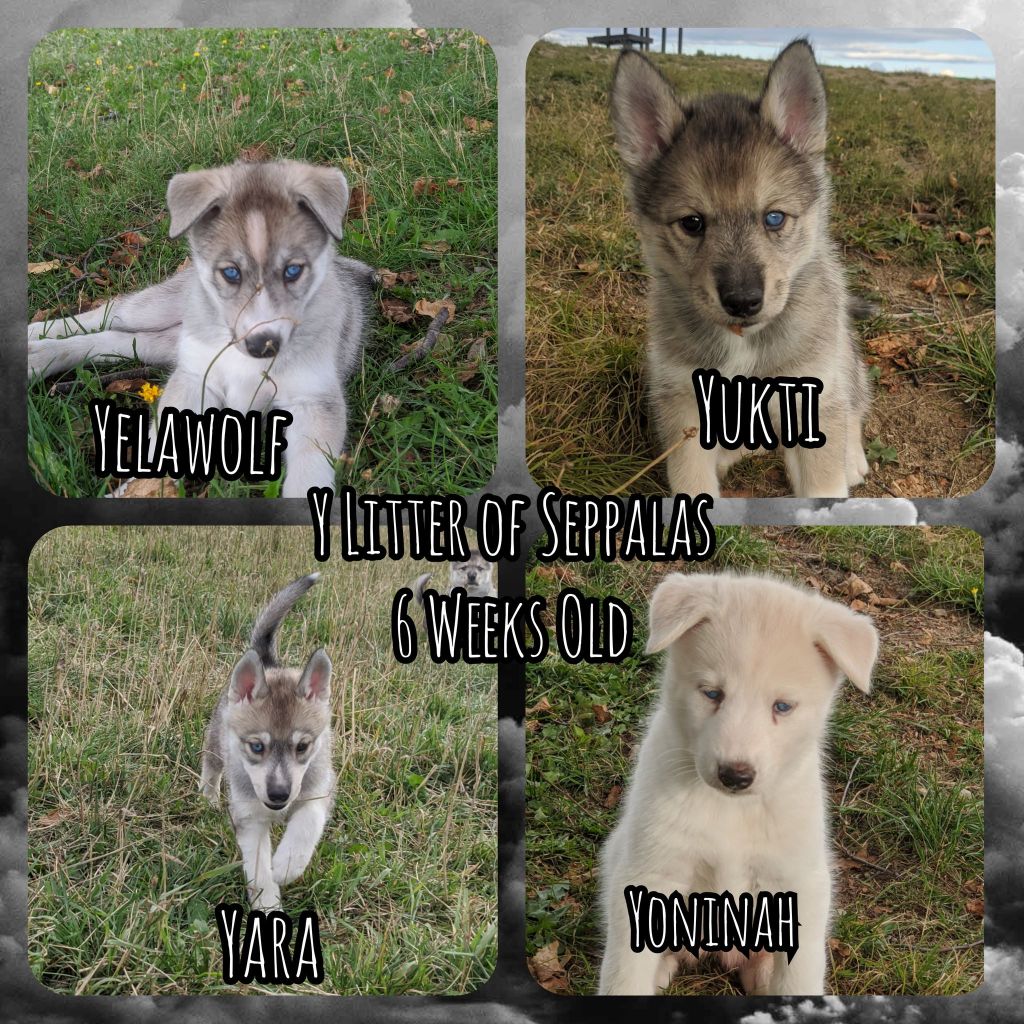

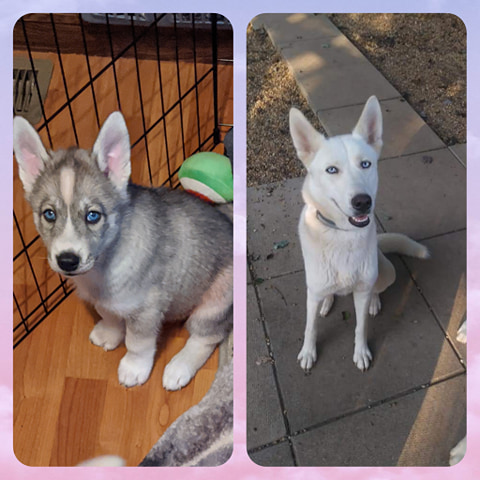
Wolf is my favorite of this litter, and the only boy. Here he is compared to his mom “Delta.” Delta is a lead dog and a true Seppala Siberian at 94%. Large ears are a trademark of the Sepps.
The perfect dog
On this fine Friday let’s get our minds off politics for a bit. I spent a while watching golden buzzer awards for America’s got Talent. Such mind-boggling talent! In fact, a few brought me to tears but I don’t want that to become common knowledge. It reminded me of watching the Ice Capades as a kid. That’s the only sport that made me cry. Why? The beauty, grace, and amazing athletes doing the impossible for us mere mortals. It struck me right in the heart that I was seeing true professionals. A professional meaning someone who makes the impossible look easy!
It suddenly appeared to me why I love the sled dogs so much. They do the exact same things only with four feet. Poetry in motion, synchronized swimming in a dance of snow, team-work, drive, and the willingness to achieve a goal or die trying. That is a talent of its own. A talent that allowed them to come this far. That is the hearts and soul of sled dogs. Why they put up with us I’ll never know for sure. But, I’m glad they haven’t given up, on us.According to the Smithsonian article, dogs have been pulling sleds for over 10,000 years! That’s 5500 years before the great pyramids were built.
Think about that for a minute, let it soak in and realize we are a race of newbies compared to dogs. They have seen it all, fought the battles, and that is why they have old wise souls, and lessons to teach us.I don’t claim to know any of these breeds but the Siberians. I do however think that the Northern breeds share the same DNA traits. They have the same drive and determination. The resistance of cold, and the joy of not only surviving it but flourishing in the most inhospitable lands on earth.I’ve had a lot of people ask me how you pick a puppy. It’s easy really, pick one that matches the life you have planned for them. You want a couch potato snuggle bunny? Pick the timid pup. You want a leader and a fearless dog? Pick the most fearless and aggressive pup in the bunch. Keep in mind training will be more difficult with such a dog but the rewards will be immense if you like to be on the edge.
In other words, pick one that matches your personality. If you are an adrenaline junky don’t pick a timid dog. Neither one of you will be happy. If you want a stay at home dog don’t pick the fierce one. For you won’t be able to give him/her what they need to be happy. Getting the pick of the litter is kind of funny. Most people pick on looks…pick your puppy on how well they will fit into your lifestyle by personality. It’s easy that way and both of you will be happy.
Don’t buy a mini-van if you need a corvette. Don’t buy a corvette if you are afraid to put the hammer down. The beauty of dogs is that there is a breed for each and every one of us. Designed, built, and bred for almost every personality. There is no perfect breed, however, there is the perfect breed for each and every one of us. You just have to be honest and pick one that matches your lifestyle. No shame in that, and you will both be happy. The joy of dogs is a blessing to all of us. Choose wisely and you will forever be blessed with the best friend you have ever had.
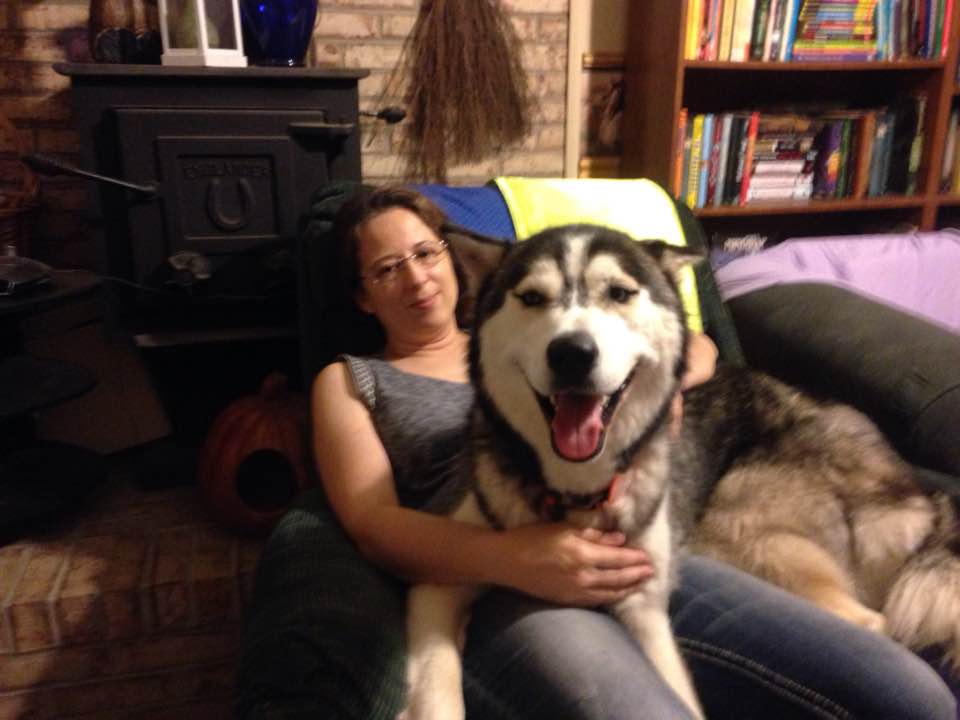
Mr. Cooper Lee
It’s hard to express how I feel about this guy. He changed my whole world. Mr. Cooper and I had a few battles when he was a puppy. The bottom line is I did not understand his kind. As a breeder of GSD’s this was a new type of dog I had no clue about. Trying to understand him and his “Siberian People” made me delve into the history of his breed. Learn every detail about them, in hopes that I could understand him.
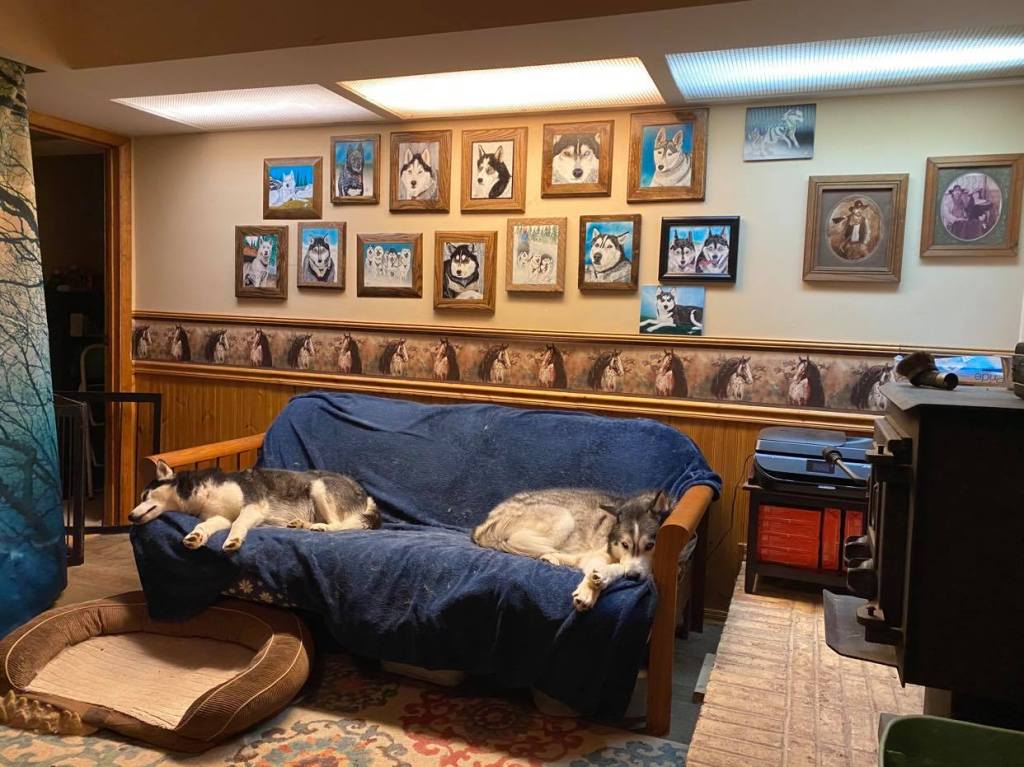
Now 5 years later I’ve written 4 books on Siberians, painted them, and embraced them as amazing living beings that make me wonder what went wrong with us humans. He may not speak one word I understand, but he taught me through his body language, stubbornness, and eyes. Thank you Cooper for opening my own eyes to your magnificent race! I’m a better person thanks to you!

One of my favorite Videos I made
Turn it up, music by Jim Croce.
Interesting Article
HUSKY ANCESTORS STARTED HAULING SLEDS FOR HUMANS NEARLY 10,000 YEARS AGO
Husky Ancestors Started Hauling Sleds for Humans Nearly 10,000 Years Ago. A genetic study shows that today’s Arctic sled dogs have something curious in common with polar bears.
:focal(3934x1501:3935x1502)/https://public-media.si-cdn.com/filer/04/79/04797a12-3e4e-4be9-ae32-6611d90d1d7c/greenland-dogs-lead.jpg)
By Brian HandwerkSMITHSONIANMAG.COM
JUNE 25, 2020
Modern sled dogs from across the Arctic can trace their ancestry back to Siberia, according to a new genetic study that dovetails with archaeological evidence. Today’s familiar breeds such as huskies and malamutes are descended from a lineage that was well-established in Siberia 9,500 years ago and has been critical to human survival in the Arctic ever since.
“We know that modern sled dogs belong to a human cultural group, the Inuit, and that is probably the common origin of the Alaskan and Siberian huskies, Alaskan malamutes, and Greenland sled dogs because those dogs are closely related,” says Mikkel-Holder Sinding, co-author of new research published in the journal Science and a population geneticist at Trinty College, Dublin.
The team sequenced the genomes of 10 modern Greenland sled dogs and compared them to not only a 9,500-year-old sled dog (represented by a mandible found on Zokhov Island, Siberia) but also a 33,000-year-old wolf from Siberia’s Taimyr Peninsula. Their analysis shows that the majority of the modern Arctic sled dogs ancestry is descended from the same distinct lineage as the 9,500-year-old Siberian dog. This is especially true of the Greenland sled dog, which, given the relative isolation of their home island, has the least mixture with other dog groups and most closely represents the original ancestry.
Evidence of ancient genes from the 33,000-year-old Siberian wolf also appeared in the modern dogs. Surprisingly, however evidence of North American wolf ancestry was absent in the modern sled dogs sampled, although the two species have lived in proximity across the Arctic for thousands of years and share familiar physical features and howling cries. The lack of North American wolf genes in modern sled dogs is a puzzle, particularly because Arctic people know sled dogs do mix with their wild relatives. Perhaps, Sinding says, dog ancestors might lie among the many North American wolf populations that were eradicated.
“These Pleistocene wolves are very old, predating the domestication of dogs, so they are not a perfect match at all for this signature we are picking up,” Sinding says. “Who really knows what kind of wolf diversity there was around even just a few hundred years ago? There’s more to this story for sure.”
The site at Zokhov Island that yielded the 9,500-year-old sled dog genome also includes physical evidence of sleds and harness materials. Bone analysis has led one team of scientists to suggest that the site may represent the earliest-known evidence for dog breeding, with sledding as a goal, and that the process may have started as long as 15,000 years ago.
The sled dogs’ genetic history aligns with archaeological evidence. Together, the findings suggest the dogs have been established for nearly 10,000 years and have spent those many millennia doing the same things they do today.
“For me, one of the most important aspects of this study is how it shows the importance of utilizing all available data from the archaeological record alongside the analysis of ancient genetics,” says Carly Ameen, a zooarchaeologist at the University of Exeter. Ameen wasn’t involved in the study but last year co-authored a study how sledge dogs accompanied Inuit dispersal across the North American Arctic.
The site’s inhabitants would have had good reason to want sled dogs. The remains of polar bears and reindeer found on Zokhov show that hunters had a wide range and somehow transported large animal kills to their camp. Tools suggest even wider travel. Obsidian implements found here have been sourced to more than 900 miles away. For ancient Arctic peoples to cover such distances, the authors theorize, dog sledding might have been essential.
Shared with the polar bears
Sinding and colleagues also found genes that appear to be unique among sled dogs when compared to their canine relatives. Perhaps not surprisingly, many of the standout adaptations have to do with food.
Sled dogs, like the Arctic peoples they live with, have eaten a steady diet of unusual fare, including fatty seal and whale blubber. The Inuit and their dogs have evolved an ability to eat huge amounts of fat but avoid cardiovascular disease. Their genetic solutions to this problem are entirely different; the sled dog’s method matches another Arctic icon, the polar bear.
“The polar bear has a very specific gene that’s selected to help it eat unlimited amounts of blubber without getting cardiovascular disease,” Sinding says. “We see almost exactly the same gene being very highly selected in the dogs.”
Modern sled dogs from across the Arctic can trace their ancestry back to Siberia, according to a new genetic study that dovetails with archaeological evidence. Today’s familiar breeds such as huskies and malamutes are descended from a lineage that was well-established in Siberia 9,500 years ago and has been critical to human survival in the Arctic ever since.
“We know that modern sled dogs belong to a human cultural group, the Inuit, and that is probably the common origin of the Alaskan and Siberian huskies, Alaskan malamutes, and Greenland sled dogs because those dogs are closely related,” says Mikkel-Holder Sinding, co-author of new research published in the journal Science and a population geneticist at Trinty College, Dublin.
The team sequenced the genomes of 10 modern Greenland sled dogs and compared them to not only a 9,500-year-old sled dog (represented by a mandible found on Zokhov Island, Siberia) but also a 33,000-year-old wolf from Siberia’s Taimyr Peninsula. Their analysis shows that the majority of the modern Arctic sled dogs ancestry is descended from the same distinct lineage as the 9,500-year-old Siberian dog. This is especially true of the Greenland sled dog, which, given the relative isolation of their home island, has the least mixture with other dog groups and most closely represents the original ancestry.
Evidence of ancient genes from the 33,000-year-old Siberian wolf also appeared in the modern dogs. Surprisingly, however evidence of North American wolf ancestry was absent in the modern sled dogs sampled, although the two species have lived in proximity across the Arctic for thousands of years and share familiar physical features and howling cries. The lack of North American wolf genes in modern sled dogs is a puzzle, particularly because Arctic people know sled dogs do mix with their wild relatives. Perhaps, Sinding says, dog ancestors might lie among the many North American wolf populations that were eradicated.
“These Pleistocene wolves are very old, predating the domestication of dogs, so they are not a perfect match at all for this signature we are picking up,” Sinding says. “Who really knows what kind of wolf diversity there was around even just a few hundred years ago? There’s more to this story for sure.”
/https://public-media.si-cdn.com/filer/1d/c7/1dc7655a-64cb-4c90-a8ca-3a2e5aae4f05/greenland-sled-dogs.jpg)
A long lineage
The site at Zokhov Island that yielded the 9,500-year-old sled dog genome also includes physical evidence of sleds and harness materials. Bone analysis has led one team of scientists to suggest that the site may represent the earliest-known evidence for dog breeding, with sledding as a goal, and that the process may have started as long as 15,000 years ago.
The sled dogs’ genetic history aligns with archaeological evidence. Together, the findings suggest the dogs have been established for nearly 10,000 years and have spent those many millennia doing the same things they do today.
“For me, one of the most important aspects of this study is how it shows the importance of utilizing all available data from the archaeological record alongside the analysis of ancient genetics,” says Carly Ameen, a zooarchaeologist at the University of Exeter. Ameen wasn’t involved in the study but last year co-authored a study how sledge dogs accompanied Inuit dispersal across the North American Arctic.
The site’s inhabitants would have had good reason to want sled dogs. The remains of polar bears and reindeer found on Zokhov show that hunters had a wide range and somehow transported large animal kills to their camp. Tools suggest even wider travel. Obsidian implements found here have been sourced to more than 900 miles away. For ancient Arctic peoples to cover such distances, the authors theorize, dog sledding might have been essential.
/https://public-media.si-cdn.com/filer/7d/23/7d23f080-81a0-4772-96e7-21318aa5d2b1/greenland-sled-dogs-2.jpg)
Shared with the polar bears
Sinding and colleagues also found genes that appear to be unique among sled dogs when compared to their canine relatives. Perhaps not surprisingly, many of the standout adaptations have to do with food.
Sled dogs, like the Arctic peoples they live with, have eaten a steady diet of unusual fare, including fatty seal and whale blubber. The Inuit and their dogs have evolved an ability to eat huge amounts of fat but avoid cardiovascular disease. Their genetic solutions to this problem are entirely different; the sled dog’s method matches another Arctic icon, the polar bear.
“The polar bear has a very specific gene that’s selected to help it eat unlimited amounts of blubber without getting cardiovascular disease,” Sinding says. “We see almost exactly the same gene being very highly selected in the dogs.”https://96d1bff3168b4af7470bf4551622c3e6.safeframe.googlesyndication.com/safeframe/1-0-37/html/container.html
Other adaptions found in sled dog genes seem to show coevolution with species that are not similar yet share the same problems. The woolly mammoth genome features highly selected thermal receptors that helped these animals sense changes in temperature, and the features mark a major difference between them and their elephant kin. That same group of proteins is selected in sled dogs, according to the study. “We have no clue why,” Sinding says. “But given that we see it in the mammoth and now in the sled dog, it seems to mean that this temperature sensation has some really important role in the Arctic.”
Ameen stresses that a genetic study like this can help to illuminate different, interesting aspects of ancient dogs—even if it hasn’t entirely put to rest the question of how much wolf ancestry is in their bloodlines.
“Recent attempts to discover the origins of the first domestic dogs have been stalled by a sole focus on genetic and morphological difference between dogs and wolves,” she says. “But when incorporated with archaeological evidence for sledding, as well as investigating dogs’ adaptation to new human-provided diets, a much clearer picture of those early domestic dogs emerges.”
Fire Lake
There are so many stories of the Siberian Husky. Most are not about famous mushers running races, but the tales about men and dogs, that no one has ever heard about. This poem is about one of those stories. A tale of the bond and how it molded these beasts to become what they are today. And why they are revered by those that push the boundaries of what is possible. And it’s not just Siberians. It’s all of the Dogs of Winter.
Those souls who were forged in snow and Ice. The bond between men and dogs, that relied on each other to survive. The shaping of an everlasting bond between them. And it was passed on to the future generations of amazing dogs. It’s my belief that these dogs have DNA memory. They are born with it. The knowledge passed down to each and every one of them. It’s there waiting for you to discover it. You only have to look into those blue eyes and find the past.
Fire Lake:
Not many knew the name so well,it was shaped like a ship’s bell.
Fire Lake you’ll never find,living there was never kind.
Nestled in the glaciers view,down below those icy pews.
Named for the fire of man’s desires,dreams of riches and golden spires.
Ali was born unto that clan, a clan made up of dogs and man.
A life of toil and trouble ahead, but that is why she was bred.
Gold mines had come and passed, love was lost at such a cost.
To work and struggle was her fate, as she was lifted and saw Nate.
A pup she was… and subject too, this human that she was destined to.
Her coat the color of Raven black, brown eyes shining above her snout.
He said, hello my little one, I’ll always love you until I’m done.
She had no idea what he meant, but she felt his love inside that tent.
Ali grew into her new life, a world of danger and strife.
But through it all Nate never failed, his love for her never paled.
For ten years she led that sled, at night she rested by his bed.
She could sense his love at night, together under those Northern lights.
And when he fell through the ice, he cut the line, a final sacrifice.
Hand reaching out as he sank, A tribute to… and maybe thanks.
Heartbroken she watched him go, and then it started to snow.
She led the team across that ice, twelve dogs as quiet as mice.
Maybe it was never meant to be, for her and Nate running free.
For ten years she’d loved that man, and given him everything she can.
Many adventures they had shared, her and that man she’d been paired.
For all those years of his love, she howled her pain to the stars above.
Nothing ventured and nothing gained, Ali thought as she chewed those reins.
Her kin was free to make their way, together across that frozen bay.
He’d loved her, and they would meet, someday again at God’s feet.
But now everything was at stake, they had to survive Old Fire lake.
Alone together the dogs of winter, their love would never splinter,
They were the Dogs of Winter.
I’m back
I have to admit It’s been a long time since I made a post. So many things going on and not enough time to do them all. Summer for sled dogs is downtime. Too hot for much excitement from them, they just try to survive until the cold comes again. The cold is where they shine. 0 or less is when the husky is comfortable. His/her inner sled dog comes out in untold energy that demands release.
I’ve been working on book number 6, and of course, painting dogs and mushers. COVID is a pain in the ass for us all. People rioting, burning cities, and just plain being stupid. When crap like this happens I’m grounded by one or more simple truths. The heart of the dog is forgiving. They lead by example but humans seem to be unable to grasp it. They don’t complain about what life they were given, they do their best to get the most out of it. Why? because you only get one chance. You roll with the cards you were dealt and either you work with that, or you fold your hand and disappear.
Sounds harsh doesn’t it? Yes it is and that is life. It could be worse, you might be a puppy given to a family that is deranged. Dogs don’t have any choice, they deal with what life gives them. But they do their best without complaint. That is the difference between dogs and humans. We complain about everything. Try being a dog subject to no control over your life. Then tell me how horrible your life is. Be thankful for what you have.
Since I’ve been painting, here is a couple of new ones.
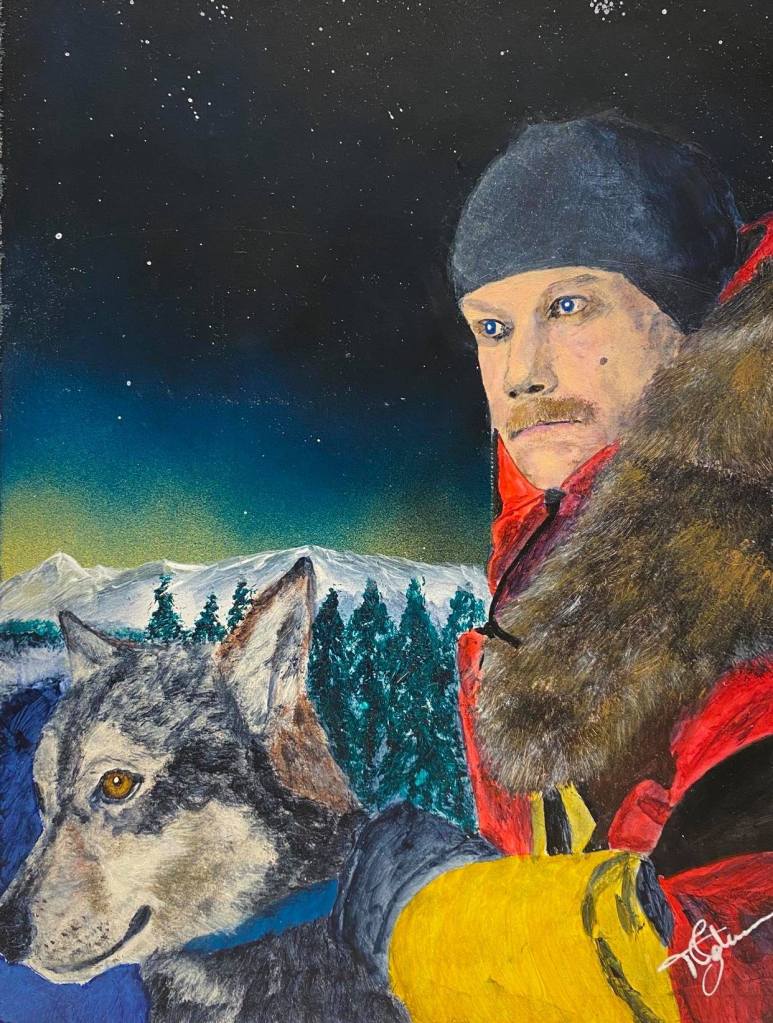
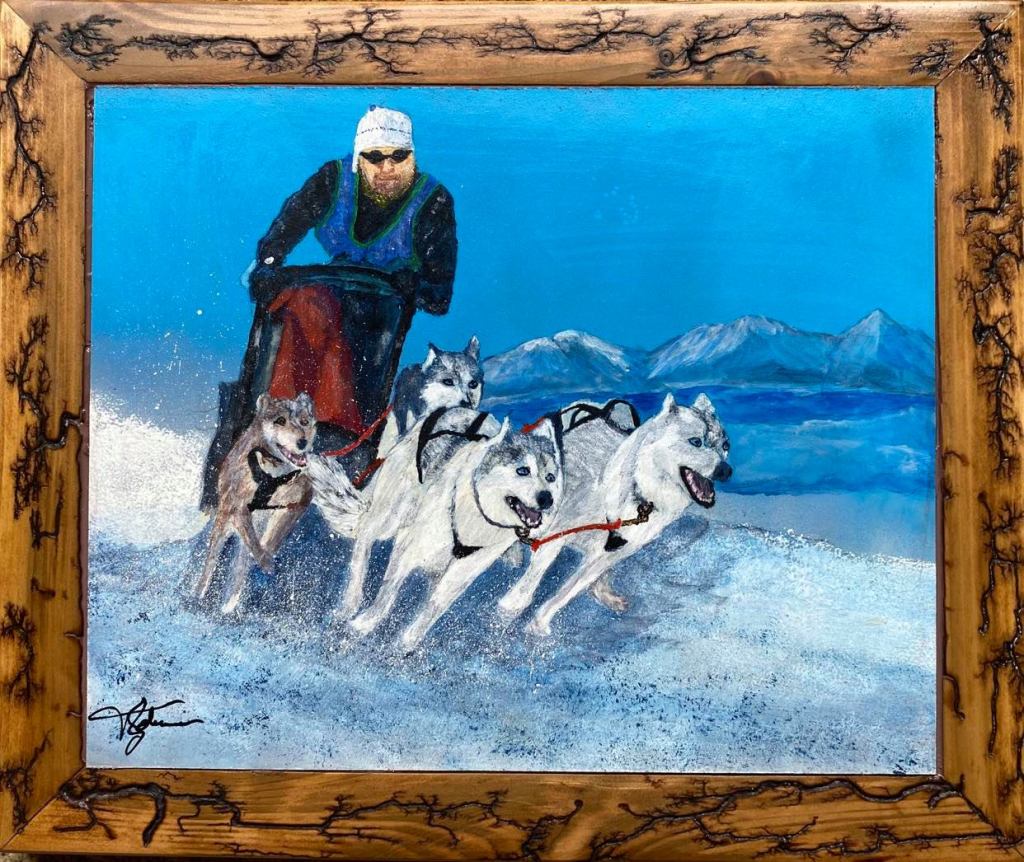
The moral of my post is, “keep positive in this new world of negative. Create, burning a city doesn’t help anyone.”
Peace my friends! I wish you well, and get a dog. They are the essence of a bible in flesh and blood. You only have to accept them as living thinking beings, not property. Study them and learn the lessons they have to teach.
TJ
Iditarod Primer: First Trip to The Great Race

Have you ever entertained the thought about going to see the Iditarod first hand? If you have or have not I would encourage everyone to make the trip to Anchorage or Fairbanks, Alaska. If you love those special athletes in fur coats, and those fearless men and women who battle across 1000 miles of wilderness by dog sled. This is the place for you!
The 2020 race began in Anchorage this year. My wife and I arrived at around 3AM and were relieved that its only a 6-mile drive to downtown and our hotel. If you get reservations at least a month or two in advance you can find a great place to stay and within walking distance of the ceremonial start.
You’ll find all kinds of restaurants and places to visit in Anchorage. The week prior to race day has a celebration going on called the “Fur Rondy.” The town is bustling with activities and has a sort of carnival atmosphere. This is like an added bonus to the normal sights in Anchorage. There are things like the Alaska State Snow Sculpture Championship, Music events, art contest, Frostbite foot race, run with the reindeer, and the Open World Championship Sprint dog races. That just names of few of the things to do before the actual Iditarod kicks off. You certainly won’t get bored before the race starts.
If you do your planning you can find some private fundraising events that you can obtain for the cost of a ticket. We attended a private dinner put on for Lance Mackey. It was held at Club Paris and includes dinner, and a chance to spend some time talking one on one with them. The food was amazing and so was getting to meet Lance. I also came away with an autographed menu from 4 time Iditarod champ Lance.


Another must-see place is the Iditarod Race Head Quarters. Which is, The Lakefront Lodge in Anchorage. Not only is it a great place to buy memorabilia. You can find lots of displays, not to mention the food and drink available. It’s also the place to buy a shuttle bus ride to and from the real start in Wasilla. The wife and I enjoyed our time at the lodge.

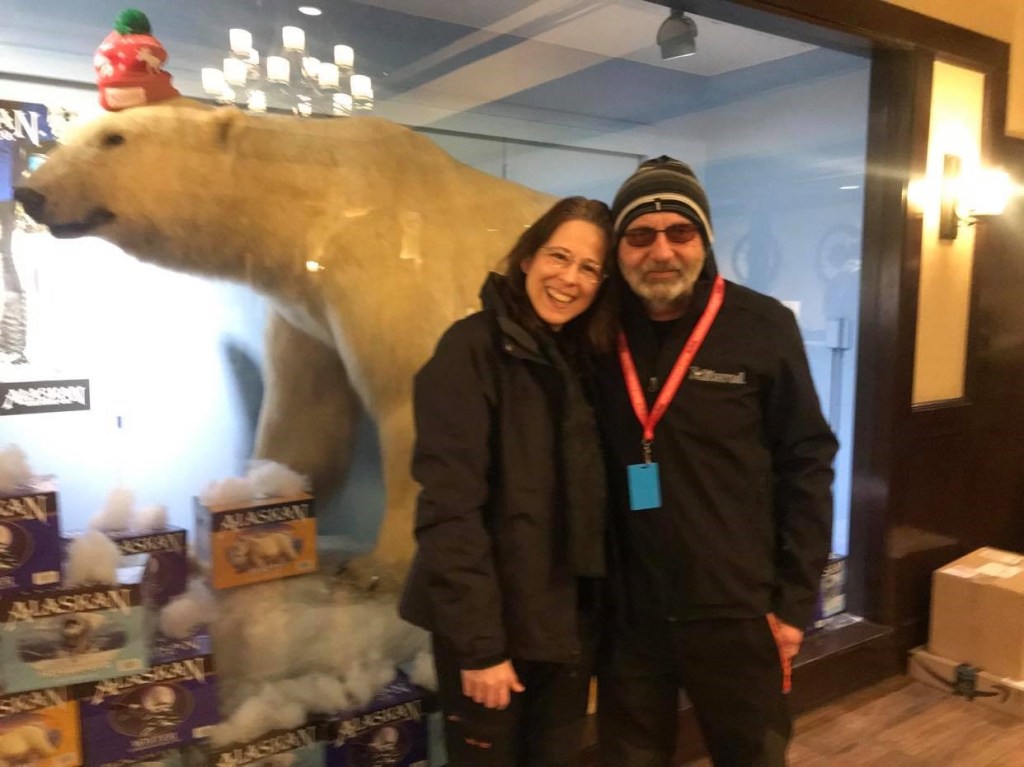
Two more must-do events are the Musher’s Meet and Greet, and the Mushers Banquet. It’s well worth the ticket price as you get to meet all the great men and ladies who will be running the race. The cost also supports the operation and continuous of this amazing race.
The two events are held one after the other. First is the Meet & Greet. This is the place to be to meet all the mushers up close and personal. You can get photos with them, autographs, and spend a few minutes asking whatever it is you want. I really enjoyed the experience and so did the multitude of fans who swarmed the event. You might have to wait in line for a bit, but it’s a great experience to meet these racers. Here are a couple other favorites of mine I met. Mr. Martin Buser and Brent Sass. Martin has completed 37 races. That’s 37,000 miles by dog sled. Brent is the next generation of great mushers.


The banquet follows the meet and greet. It also includes dinner and everyone sits at large round tables that hold about 10 people. The food is excellent and you eat while listening to presentations, drawings, and some stories. Next is the actual bib drawing that determines each racers starting position in both the ceremonial start, and the actual start. It was another great event to attend.
The first chance you get to actually see the dogs and mushers is the ceremonial start. The streets are lined with vendors and for this race multitudes of people packing the avenue. You thread your way to the starting gate through the crowds. On the way, you begin to see teams being hooked up, and being staged according to their bib numbers. Next to the sidewalks and only a few feet away are the teams. You can lean over the fence and take photos and listen to the din of 58 dog teams crying out to run. You can sense the excitement in them and the impatience to wait their turn to run.
This year I think the course was ten miles long, winding its way through and round the city proper. You can find lots of places to watch or take photos. Getting cold or hungry is not a problem as there are places open right on the street to get warm, and get food and drink.
The teams leave one by one and head down the avenue lined with folks cheering their favorites. If you want to bid on a chance to ride in the sled with one of these mushers there are auctions on line prior to race day for your chance. I have to warn you the bidding is furious and not for the faint of heart. But the winners get a once in a lifetime ride.
Of course, the main event is the official start in Wasilla. The best way to get to and from that is by shuttle busses. The Iditarod Trail Committee (ITC) coordinates a system of school busses that pick up and return all-around Anchorage. Not the most comfortable way to travel but it’s less than an hour to be dropped off and not have to worry about the limited parking or weather. It was snowing big time when the mushing royalty Seaveys pulled in.

It’s another exciting time. The holding area is full of the teams getting ready. Again, the cacophony of hundreds of dogs sensing it’s almost time to begin the great race. Don’t worry about facilities the ITC things of the spectators needs. There is a place to get warm, eat, and although sometimes there are lines, bathrooms do exist when you need one.
This is it! Tension is in the air as the teams are staged and the countdown to Nome begins for each one. Here is what the musher see’s in that first mile of a thousand. And of course, listen to the crowd cheering them on to Nome! Here is what the musher sees’s in the first mile of a frozen lake.

That was my first trip to the Iditarod and probably not my last. I’m left with nothing but fond memories and my wife and I had nothing but a positive experience. The ITC puts on an outstanding event. They seem to think of everything they can so that people can enjoy it. If you’re more adventurous you can become a volunteer. There are jobs from call centers to Pilots and everything in between. I may just take them up on that next time.
If you’ve been toying with the idea about going. Take it from me, if you love dogs and mushing you won’t regret it.

The Iditarod: Long May You Run!
Embrace the Fur
Embrace the Fur:
Huskies have so many fine qualities. Like escaping through fences that Houdini would say were escape-proof and impossible, digging holes in the yard that would make a Marine jealous, eating holes through your walls just to prove they can’t be contained if they set their mind to it. They truly have their own way about them. It takes a few years to get in tune with how they think, and what they need to be good citizens.
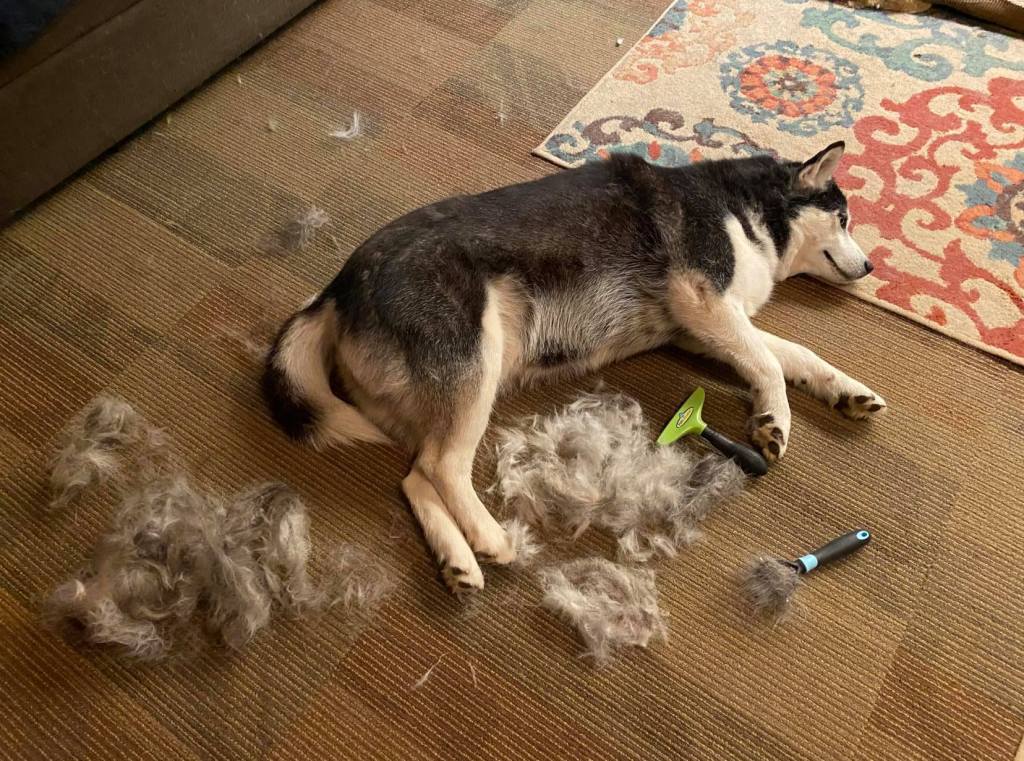
Pulling comes naturally, thousands of years of DNA encoded memories make that child’s play. Hook a husky to something and they will pull it over, down, and doing it at warp speed. It’s the nature of them. The only thing I find a bit hard to deal with is the fur. Huskies shed or “blow their coats” at least once a year, sometimes twice. Now, this explosion of fur not only makes birds looking for nesting material happy but coats you with it.
If your dogs live in the house you live with fur. It becomes almost second nature as dust on your favorite knick-knacks. Only it comes in amounts huge enough to build new dogs just from the fur.Fur that can make them comfortable at -30 degrees F will all of a sudden decide to fall out. I often wonder why? It’s good fur, why did you fall out now? Save yourself for winter! But the fur has a mind of its own. It will come out and you will ruin many vacuum cleaners searching for the one that can take the load.
The only good part of this is if you are a good pack leader you groom them. Yes, it is a pain but I found it both soothing for me and my dogs. It’s a bonding thing about grooming your dogs. Mine love it, like getting to go to the spa and beauty salon. I find I like it too because it brings us closer together. With no words spoken the strokes of the comb work magic. It’s the act of showing them how much you love them. They return that love with their eyes and body language. It is one of the ways to become one with your pack.
 Life with Siberian Huskies